Heat Pump Water Heaters Explained for Homeowners
A plain-English guide to heat pump water heaters for Katy homeowners: how they work, what they cost in 2026, which rebates apply, and when to call us.
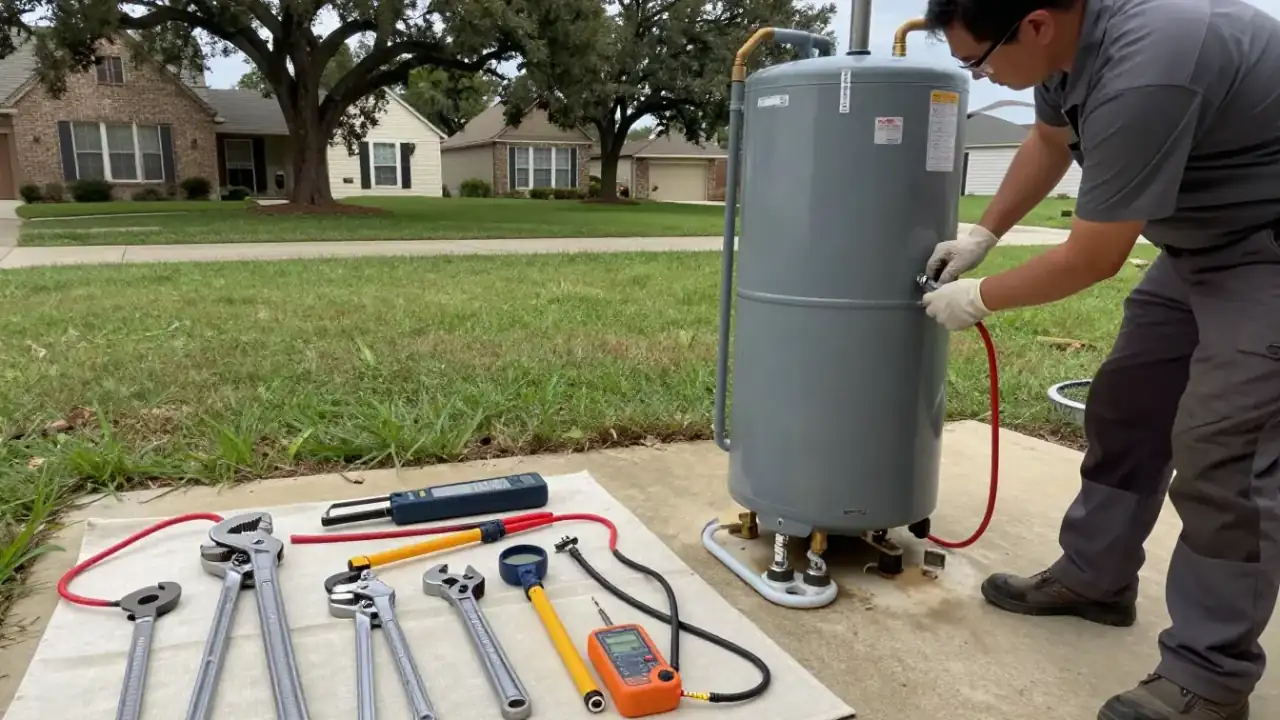
A heat pump water heater moves heat from the air into a tank instead of burning gas or firing a resistive element, which is why it can cut water heating energy use by 50% to 65% compared with a standard electric tank. In Katy, Texas, that math matters because water heating is the second-largest energy load in most homes after air conditioning. This guide covers how these units actually work, what they cost in 2026, which rebates apply locally, and the mistakes we fix on them every week.
How a Heat Pump Water Heater Works in Katy TX
A heat pump water heater is a hybrid appliance that pulls ambient heat out of the surrounding air and transfers it into the water in the tank. Think of it as a refrigerator running in reverse: instead of dumping heat out of the box, it dumps heat into your water.
The mechanics are simple once you see them. A fan pulls air across an evaporator coil filled with refrigerant. That refrigerant absorbs heat even from 60°F garage air, gets compressed to raise its temperature to around 150°F, and then passes through a condenser coil wrapped around or immersed in the tank. The water warms. The cooled air blows out the bottom or side of the unit.
Because it is moving heat rather than creating it, the unit runs on roughly the same electricity as a 500-watt bulb while it is in heat pump mode. Most models also carry backup resistive elements for high-demand mornings, and that is where the "hybrid" name comes from. You get efficiency when you want it and recovery speed when you need it.
Three operating modes matter in our climate:
- Heat pump only - slowest recovery, lowest cost, best for households with predictable morning showers.
- Hybrid / auto - switches to elements when demand spikes. This is what we set most Katy homes to.
- Electric resistance - fast recovery, higher bills. Useful as a temporary override, not a daily setting.
If you have ever wondered how heat pump water heaters work in Katy TX specifically, the answer is: exactly the same as anywhere else, but the ambient air in your garage is warmer and more humid than most of the country, which actually helps the unit perform.
Why Heat Pump Water Heaters Fit Katy Homes and Garages
Heat pump water heaters fit Katy homes because our climate gives them the two things they need most: warm intake air and a place to dump cool, dry exhaust. A garage in Cinco Ranch sitting at 85°F in July is close to ideal operating conditions.
There is a catch, and we see it on almost every install. The unit needs roughly 700 to 1,000 cubic feet of unoccupied air around it. A two-car garage clears that easily. A closet does not. If you are replacing an old electric tank in a sealed interior closet, we either louver the door, add a transfer grille, or move the unit to the garage.
Humidity is the other local factor. Our summer dew points sit in the 70s, and a heat pump water heater acts as a small dehumidifier - it pulls 1 to 3 pints of condensate per day out of the air. That condensate has to drain somewhere. We run it to a floor drain, a condensate pump, or the pan drain. If it just drips onto the garage floor, you get a slick spot and eventually a rusted tank base.
Noise is worth mentioning before you buy. These units run at about 45 to 55 decibels - quieter than a dishwasher, louder than a fridge. If the water heater shares a wall with a bedroom, plan accordingly.
Homeowners we work with across Cinco Ranch water heater repair often ask whether the switch is worth it after 10 or 15 years on a standard electric tank. Usually it is, but the answer depends on your garage layout and how many people are showering every morning.
Are Heat Pump Water Heaters Worth It in Katy TX?
Are heat pump water heaters worth it in Katy TX? For most households of three or more people with a garage-mounted tank, yes - the unit pays back its price premium in four to seven years on electricity savings alone, and faster once you stack rebates.
Here is the honest 2026 math for a 50-gallon replacement in the Katy area:
- Standard 50-gallon electric tank installed: $1,400 to $2,100
- Heat pump water heater installed: $2,600 to $4,200 before rebates
- Annual operating cost, standard electric: roughly $520 to $620 at current rates
- Annual operating cost, heat pump: roughly $180 to $260
That is a savings of $300 to $400 per year. Over a 12-year tank life, you are looking at $3,600 to $4,800 back in your pocket. The unit costs more up front; the utility bill is where you win.
Where it stops making sense: one-person households, homes with a tank in a hot attic with no airflow, or anyone who needs 80 gallons of hot water back-to-back for a large family. In those cases a tankless unit or a standard tank is often the better call.
We also get asked about cold snaps. During the February 2021 freeze, plenty of Katy homes lost power entirely, and no water heater of any kind helps then. But in normal winter weather - say 35°F to 45°F in the garage - a heat pump unit still runs, just with the backup element kicking in more often. It is not a Houston-specific problem.
If you are still deciding, our team handles heat pump unit installation Katy TX and can tell you in one visit whether your garage, panel, and household demand support the switch.
What Rebates Are Available in Katy, Texas?
What rebates are available for heat pump water heaters in Katy Texas? The main one is the federal 25C tax credit, which covers 30% of the unit and installation cost up to $2,000, and it has been in place since 2023. Stack that with any utility or manufacturer rebate you qualify for and the gap narrows fast.
Here is what typically applies in 2026:
- Federal 25C tax credit - 30% of cost, capped at $2,000. Requires an Energy Star certified unit with a Uniform Energy Factor of 3.3 or higher for tanks 55 gallons and under.
- Manufacturer rebates - $100 to $500 depending on brand and model, usually paid as a prepaid card or invoice credit.
- Utility programs - some Texas retail electric providers run seasonal promos. Worth a phone call before you buy.
Keep your receipt and the manufacturer's certification statement. The credit is claimed on your federal return, not at the register. We hand every customer the paperwork they need, labeled and dated, so nothing gets lost between install day and tax season.
One thing to watch: the credit applies to the unit and labor, but not to permits or extended warranties. Read the fine print before you assume the full invoice qualifies.
Installation: What Actually Happens in Your Garage
Installation takes four to six hours for a straight swap and longer if we are moving the unit, adding a drain line, or upgrading the electrical circuit. Most heat pump water heaters need a dedicated 240-volt circuit, and many older Katy homes have a 30-amp circuit that is already maxed out.
Here is the sequence we follow:
- Drain and remove the old tank, including the pan and any failed fittings.
- Verify the electrical panel can carry the new load. If not, we coordinate with an electrician.
- Set the new unit on a level pad with the required clearance - usually 6 to 12 inches from walls.
- Plumb the condensate drain to a floor drain or condensate pump.
- Connect the T&P valve, expansion tank, and flex connectors.
- Fill, purge air, pressure-test, and set the operating mode.
- Walk you through the control panel and register the warranty.
Permits are required in most Katy-area jurisdictions for a water heater replacement, and the inspection covers the T&P discharge line, the pan drain, and the flue or venting if applicable. We pull the permit and meet the inspector.
If your current tank is leaking and you are weighing repair versus replacement, we handle leaking tank repair Katy TX and will tell you straight whether the tank has another year in it or not.
Common Mistakes We See on Heat Pump Water Heaters
Common mistakes on heat pump water heaters almost always come down to airflow, drainage, or settings - not the compressor. Fix those three and the unit runs for 12 to 15 years.
The ones we see most often:
- Sealing the unit in a closet. No airflow means the unit runs in resistance mode permanently, and your bill looks like a standard electric tank.
- Ignoring the condensate line. A clogged drain backs water into the pan, rusts the base, and eventually shorts the control board.
- Leaving it in electric resistance mode. Someone flips it during a busy weekend and never flips it back. Check the mode every few months.
- Skipping the anode rod. Heat pump tanks still have a sacrificial anode, and in Katy's water it usually needs inspection at year three and replacement by year five or six.
- Setting the temperature too low. Below 120°F, you risk bacterial growth in the tank. 120°F to 125°F is the sweet spot for efficiency and safety.
- Filter neglect. Most units have a washable intake filter. Rinse it every three months or the coil ices up.
If your unit has stopped heating entirely, our not heating troubleshooting Katy TX service covers the diagnostic - usually a failed element, a tripped high-limit switch, or a bad thermistor.
When to Call a Professional
Call a professional when the unit throws an error code, when you see water under the tank, when the breaker trips repeatedly, or when the compressor runs but the water stays cold. Those are not homeowner fixes on a sealed refrigerant system.
We also get calls from homeowners in Seven Meadows water heater repair and surrounding neighborhoods for annual maintenance - flushing the tank, pulling and inspecting the anode rod, cleaning the evaporator coil, and testing the T&P valve. That visit costs far less than a mid-summer emergency replacement.
Our technicians are state-licensed plumbing contractors. We diagnose first, quote a flat price before we touch anything, and carry the common parts for the major brands on the truck. If the unit is under warranty, we handle the claim paperwork.
Frequently Asked Questions
How does a heat pump water heater work in Katy TX?
It pulls heat from the surrounding air using a refrigerant loop, concentrates that heat with a compressor, and transfers it into the tank water. In Katy's warm garages, intake air is usually 75°F to 95°F, which keeps the unit running efficiently year-round.
Are heat pump water heaters worth it in Katy?
Yes for most households of three or more people. Expect $300 to $400 per year in electricity savings, which pays back the $1,200 to $2,000 price premium in four to seven years. Add the 30% federal tax credit and the payback shortens further.
What rebates are available for heat pump water heaters in Katy Texas?
The federal 25C tax credit covers 30% of the installed cost up to $2,000. Manufacturer rebates run $100 to $500, and some Texas retail electric providers offer seasonal promos. Keep your receipt and the manufacturer certification statement for your tax filing.
Who installs heat pump water heaters near me in Katy?
We do. Katy Water Heater Repair installs, services, and repairs heat pump water heaters across Katy and the surrounding communities, including Cinco Ranch, Seven Meadows, Firethorne, and Fulshear. We pull the permit and handle the inspection.
How long does a heat pump water heater last?
Twelve to fifteen years with annual maintenance. The compressor is usually the last thing to fail - most units we replace die from a rusted tank, a failed element, or a control board that took on water from a clogged condensate line.
Get Help with Water Heater Repair in Katy
Whether you are replacing an old electric tank with a heat pump unit or your current one has stopped heating, we can help. Our team serves Katy and the surrounding communities with same-day diagnostics and upfront pricing.
Call (281) 326-6032 to schedule service or get a straight answer on whether a heat pump water heater is the right move for your home.