Understanding Water Heater Temperature and Pressure Relief Valves
Your water heater's TPR valve is the single most important safety device on the tank. Here's how it works, why it leaks, and when to replace it in Katy, TX.
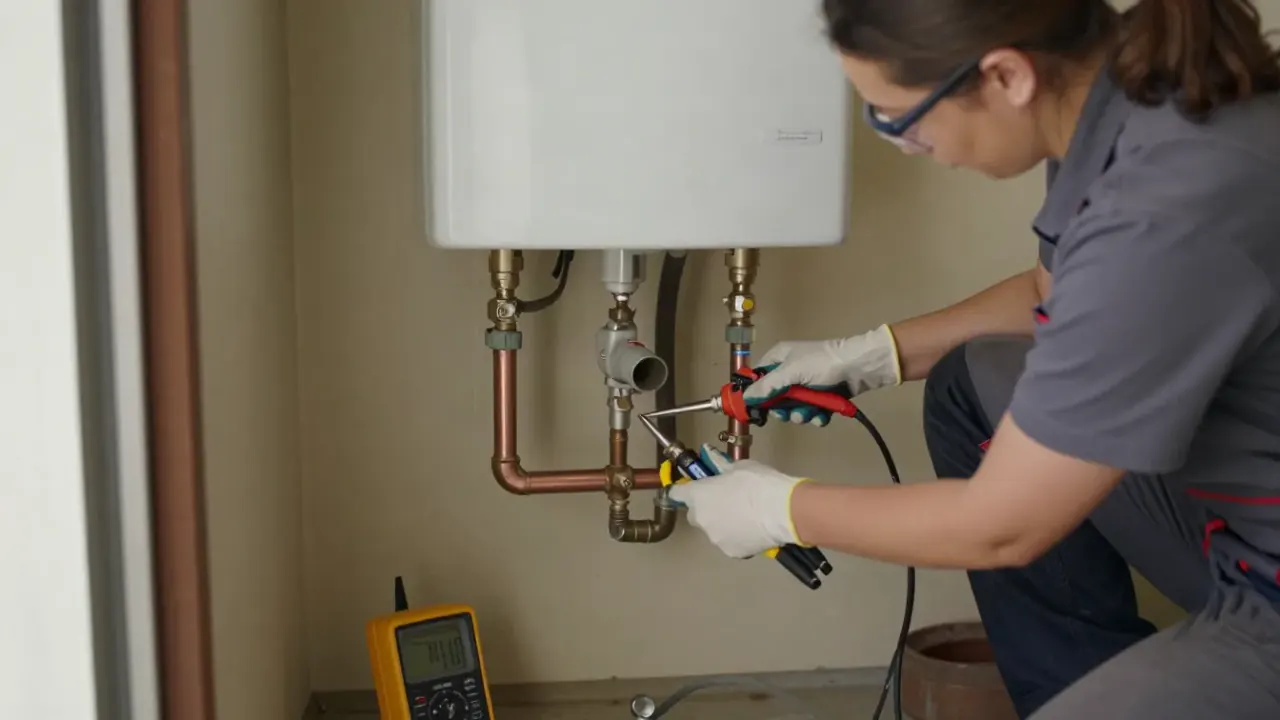
A water heater temperature and pressure relief valve - commonly called a TPR valve - is a safety device that automatically opens to release water or steam when the tank's internal pressure exceeds 150 PSI or the temperature climbs above 210°F. If your TPR valve is leaking, the most common causes are a failed internal seal, excessive thermal expansion, or sediment buildup pushing pressure past the threshold. In Katy, where hard water is a fact of life, that sediment problem shows up more often than most homeowners expect. This article breaks down how the valve works, why it fails, what replacement costs in 2026, and when it's time to call someone.
What a TPR Valve Actually Does
A TPR valve is a brass-and-rubber safety mechanism mounted on the top or side of your tank that combines two functions: it monitors temperature and pressure simultaneously. When either reading crosses its limit, the valve lifts and dumps water through a discharge pipe to a safe location - usually outside or to a floor drain.
It is not a convenience feature. It is the last line of defense between a normal tank and a catastrophic rupture. Without a working TPR valve, a tank that overheats can build pressure until the steel shell fails. That is why every major plumbing code in Texas - including the International Plumbing Code adopted across Fort Bend and Harris counties - requires a TPR valve on every storage water heater.
Three specifications matter on every valve:
- Pressure rating: 150 PSI or 210°F is the standard set point for residential tanks.
- BTU rating: The valve must match or exceed your tank's BTU input - a 40,000 BTU valve on a 75,000 BTU burner is a code violation.
- Discharge pipe: Must be the same diameter as the valve outlet, typically 3/4 inch, and terminate 6 to 24 inches above the floor.
If you're not sure whether your valve meets those specs, our team at Water Heater Repair Katy TX checks TPR valves on every service call we run.
Why Is My Water Heater TPR Valve Leaking in Katy?
A leaking TPR valve in Katy almost always traces back to one of four causes: thermal expansion, sediment buildup, a worn internal seal, or a system pressure issue from the municipal supply.
Katy sits on some of the hardest water in the greater Houston area. Calcium and magnesium settle at the bottom of the tank, insulate the burner from the water, and force the system to run hotter and longer to hit the setpoint. That extra heat drives pressure up. The valve does its job and releases - but it keeps releasing, and eventually the rubber seat degrades from repeated cycling.
Thermal expansion is the other big one. If your home has a backflow preventer or pressure-reducing valve on the main line - common in newer Katy subdivisions like Water Heater Repair in Cinco Ranch - heated water has nowhere to expand. Pressure spikes every time the burner fires. A thermal expansion tank solves that; a new TPR valve alone will not.
Here's how to tell which problem you have:
- Drips only after hot water use: thermal expansion. Add an expansion tank.
- Steady drip all day: worn valve seat. Replace the valve.
- Rumbling or popping sounds: sediment. Flush the tank and inspect the valve.
- Water is discolored or smells metallic: tank corrosion. The valve may be the least of your problems.
If you're seeing a steady drip and you're not sure whether it's the valve or the tank itself, a leaking tank repair Katy TX inspection will tell you in about 20 minutes. We pressure-test the tank, check the valve seat, and confirm whether the leak is coming from the TPR or a failing weld.
How Often Should TPR Valves Be Replaced in Katy Texas?
TPR valves in Katy should be replaced every 3 to 5 years, or sooner if the tank sees heavy use or hard-water conditions. Most manufacturers print a 3-year service interval on the tag; in practice, valves in this area rarely make it past five.
Why so short? Two reasons. First, the rubber diaphragm inside the valve hardens with age and heat cycling. Second, Katy's water chemistry accelerates mineral deposits on the valve seat. A valve that passed a manual test two years ago can fail to reseat after a single pressure event.
You should test the valve manually once a year by lifting the lever for 2 to 3 seconds and letting it snap back. If it drips afterward, it's done. If it doesn't release water at all when you lift the lever, it's also done - a stuck valve is more dangerous than a leaking one.
Replacement itself is quick. A standard 3/4-inch TPR valve runs $15 to $40 for the part, and a licensed plumber in the Katy area charges $150 to $300 total in 2026 including labor and a new discharge pipe if needed. That's a small price compared to a tank rupture.
While we're in there, we usually recommend a water heater maintenance service Katy visit - flushing the tank and replacing the anode rod at the same time extends the life of both the valve and the tank itself.
Signs Your TPR Valve Is Failing
A failing TPR valve gives you warnings - you just have to know what to look for. The most obvious sign is water pooling near the base of the tank or dripping from the discharge pipe when no one has used hot water in hours.
Other signals:
- Mineral crust around the valve outlet: white or greenish buildup means the valve has been weeping for a while.
- The lever feels stiff or won't move: the internal mechanism is seized.
- Water from the discharge pipe is scalding hot: the tank thermostat may be stuck, and the TPR is the only thing keeping pressure in check.
- You hear a hissing or gurgling sound from the tank: steam is escaping - shut off the gas or breaker and call someone immediately.
One thing to keep in mind: a TPR valve that never drips is not automatically healthy. Valves fail closed, too. That annual manual test is the only way to know yours still opens.
If you're in one of the older neighborhoods west of the Grand Parkway - places like Water Heater Repair in Nottingham Country where many tanks are pushing 10 to 12 years - we see more seized valves than leaking ones. Age catches up with the mechanism either way.
Common Mistakes Homeowners Make
The single biggest mistake is capping or plugging a leaking TPR valve. We've seen it more than once in Katy: a homeowner gets tired of the drip, screws a brass cap onto the outlet, and turns a $200 repair into a potential bomb. Never do this. The valve is leaking because pressure needs to go somewhere.
Other mistakes we run into:
- Replacing the valve without addressing the cause. If thermal expansion is the root problem, the new valve will leak within months.
- Using the wrong valve rating. A 30 PSI valve from a big-box store is not the same as a 150 PSI residential TPR.
- Routing the discharge pipe into a wall or crawlspace. Code requires it to terminate where you can see it - usually 6 to 24 inches above the floor.
- Ignoring the expansion tank. If your home has a closed plumbing system and no expansion tank, you're asking the TPR to do a job it wasn't designed for.
- Testing the valve and walking away. After you lift the lever, stay and watch it for a full minute. If it drips, it needs replacing.
If you've already made one of these mistakes, don't panic - but do get it looked at. A quick inspection is cheaper than a flooded garage.
When to Call a Professional
Call a professional the moment your TPR valve drips continuously, won't reseat after a test, or shows any sign of corrosion around the threads. Those are not DIY fixes - the valve is under full system pressure, and getting it wrong means water damage or worse.
You should also call if:
- The discharge pipe is missing, capped, or routed incorrectly.
- Your tank is over 8 years old and the valve has never been replaced.
- You see water pooling under the tank but can't tell whether it's the valve or the tank itself.
- Your water heater is making popping or rumbling sounds along with the leak.
At Katy Water Heater Repair, we replace TPR valves, install thermal expansion tanks, and diagnose the underlying cause so the new valve actually lasts. We carry standard 3/4-inch valves on every truck and can usually finish the job in under an hour. If the tank itself is the problem, we'll tell you straight - no upsell.
Frequently Asked Questions
What is a temperature and pressure relief valve on a water heater in Katy TX?
It's a safety valve that opens at 150 PSI or 210°F to release pressure from the tank. Every storage water heater in Katy is required by code to have one, and it must be tested annually and replaced every 3 to 5 years.
Why is my water heater TPR valve leaking in Katy?
The most common causes are thermal expansion, sediment buildup from hard water, and a worn internal seal. If the drip only happens after hot water use, it's likely expansion. If it drips constantly, the valve seat is probably shot and needs replacement.
How often should TPR valves be replaced in Katy Texas?
Every 3 to 5 years. Katy's hard water and hot summers shorten valve life compared to cooler, softer-water regions. If your valve is older than five years or has never been tested, replace it - the part is inexpensive and the risk of skipping it is not.
Who replaces water heater relief valves near me in Katy?
Katy Water Heater Repair handles TPR valve replacement, expansion tank installation, and full tank diagnostics. We carry standard valves on every truck and can usually complete the job in under an hour. Call (281) 326-6032 to schedule.
Can I replace a TPR valve myself?
Technically yes, but we don't recommend it. The valve is under full system pressure, and a bad install can leak or fail to open when it matters. A licensed plumber charges $150 to $300 total in 2026 - cheap insurance for a safety device.
Get Help with Water Heater Repair in Katy
If your TPR valve is leaking, stuck, or more than five years old, don't wait for it to fail. We'll diagnose the cause, replace the valve, and make sure your tank is safe before we leave.
Call Katy Water Heater Repair at (281) 326-6032 to schedule your TPR valve inspection or replacement.